
Guide
How to plan a factory relocation: timeline, downtime and responsibilities
A factory relocation is a project with one fixed goal: production has to run again at the new site, on time and at the agreed quality. Whether you consolidate two plants, move closer to customers or relocate a line to Poland or Central Europe, the same phases and the same risks come up.
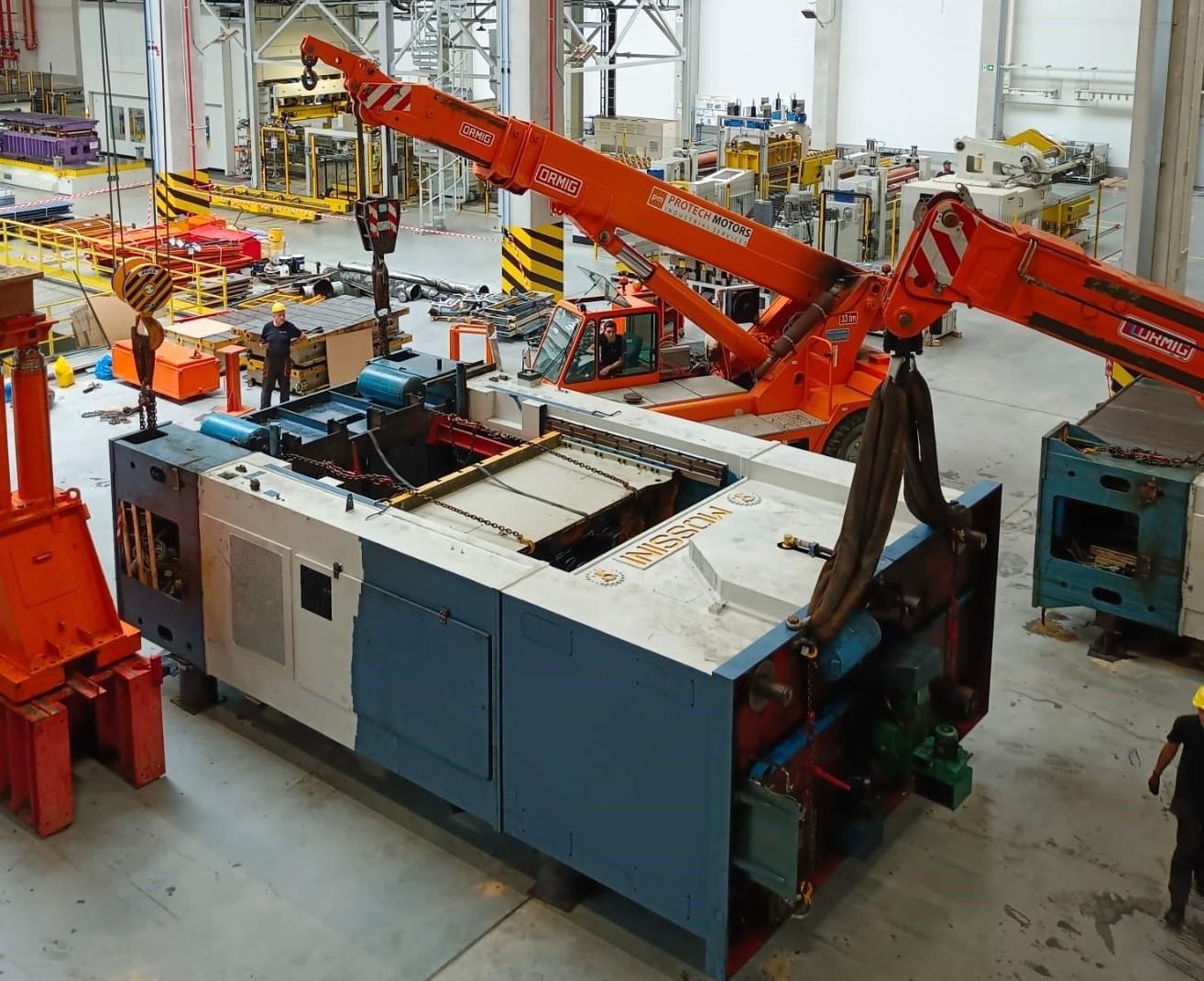
The phases of a factory relocation
Every relocation runs through the same stages. Skipping one of them rarely saves time – it moves the problem to the day the machines are already on the truck.
- Inventory: which machines, lines and auxiliary equipment move, which are sold or scrapped
- Layout of the new site and the order in which areas are moved
- Preparation of the new building: foundations, utilities, permits
- Dismantling, transport and installation in waves
- Commissioning, ramp-up and handover
Keeping downtime short
Downtime is usually the largest cost of a relocation, much larger than transport. The common approach is to move in waves: one line or area at a time, while the rest keeps producing. Building up a stock of parts before the move, or temporarily shifting production to another site, buys time for the critical machines.
Bottleneck machines deserve the most attention. If one press or one machining centre feeds the whole plant, its move defines the schedule – plan it first and give it the largest buffer.
Planning a site or line relocation?
We coordinate dismantling, transport, installation and commissioning of complete lines across Europe with a partner team with 25+ years of experience.
Who is responsible for what
A relocation involves many parties: your production and maintenance teams, the building contractor, electricians, the rigging and transport company, and often machine manufacturers. Most delays happen at the interfaces between them. One coordinator who owns the whole schedule – from dismantling to commissioning – removes most of these gaps.
- Who prepares foundations and utilities at the new site?
- Who disconnects and reconnects electrics, hydraulics and controls?
- Who is responsible for the machine between dismantling and commissioning – including insurance?
- Who signs off the restart and against which criteria?
Questions to ask a relocation contractor
Ask for reference projects of similar size, the lifting equipment they own or have access to, how they document dismantling, and whether they can take responsibility for installation and commissioning – not just transport. A clear method statement is a better sign than a low price.
FAQ
Frequently asked questions
How early should a factory relocation be planned?
As early as possible – ideally when the decision on the new site is made. Foundations, permits and utilities at the new location take time, and the order of moving lines affects the building work.
Can production continue during a relocation?
Often yes, partly. Moving in waves, building up stock and temporarily shifting production help to keep customers supplied while individual lines are moved.
Can you relocate production lines to Poland?
Yes. Relocation of machines and complete lines to Poland and Central Europe is one of the typical projects of our partner team, with project coordination in English, German and Polish.
Tell us about your project
Send us the machine type, weight, current and new location and your timeframe. You will receive a proposed method and a budget estimate.
Thank you – your enquiry has been sent.
We will get back to you within one business day.