
Home / VR, AR & digital twin overview
VR · AR · Digital twin
VR training for aviation and MRO
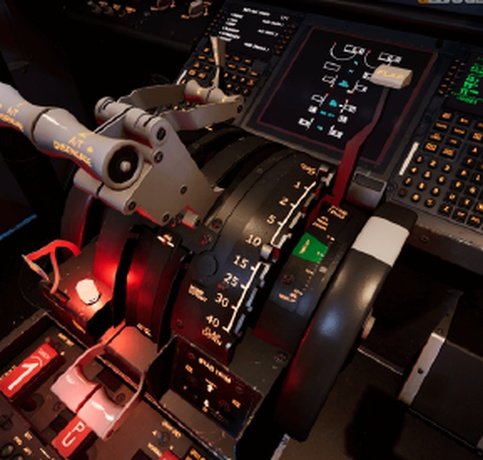
Real aircraft are expensive training equipment: limited availability, fuel costs and the risk of mistakes. Our VR run-up simulator recreates the Boeing 737NG cockpit and the complete engine start-up procedure, so aviation mechanics can practise as often as they need.
Reply within one business day · EN · DE · PL
Real project · aviation & MRO
Watch: VR run-up simulator in action
Boeing 737 engine run-up training in virtual reality – a real project with measurable results. 4-minute video.

Key features
- Fully recreated Boeing 737NG cockpit in VR
- Lesson mode with step-by-step guidance
- Training mode with error feedback
- Evaluation mode with full assessment and error logging
- Dozens of scenarios including malfunctions
- Real-time monitoring and detailed reports for instructors
Who uses it
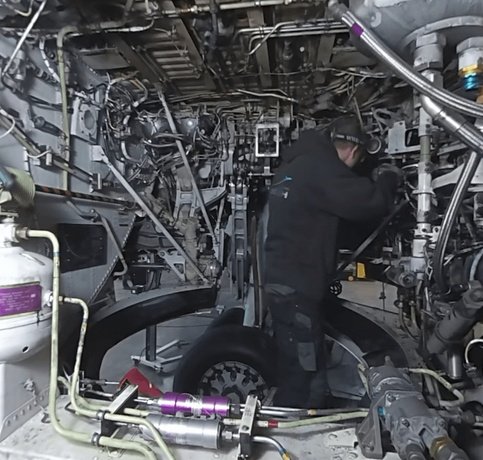
Aviation training centres, vocational schools and Part-147 / Part-145 maintenance organisations that want to scale training capacity without increasing aircraft utilisation or fuel consumption.
Further aviation applications
VR classes for students and employees, AR materials, training for mechanics and engineers, pilot training elements and the use of real physical tools in a VR environment.
How we work
Step by step
Analysis of procedures and training goals
Cockpit and system modelling
Scenario and assessment design
Testing with instructors
Roll-out and support
Case study: BCU Krosno
At the aviation training centre BCU Krosno, VR became part of the regular curriculum. Each real run-up consumes about 200–250 kg of fuel. With VR, fuel costs for practical training fell by an estimated 70% (approx. €18,000–22,000 per year for 100 students), while 92% of students were actively engaged during VR sessions.
All case studies →Selected clients of our partner network



FAQ
Frequently asked questions
Does VR replace training on the real aircraft?
No. VR prepares students so that their time on the real aircraft is used more effectively and safely.
Can the simulator be adapted to other aircraft types?
The approach can be transferred to other types and procedures as a custom project.
Who developed the simulator?
It was developed together with aviation industry experts and is used in aviation technical training in Poland.
Let’s talk about your training challenge
Describe your use case, the number of users and your timeline. We will get back to you with a concept and a budget range.
Thank you – your enquiry has been sent.
We will get back to you within one business day.